
Is Self-Doubt Holding You Back? Here's How to Conquer It

Craig Allen • January 28, 2024

Self-doubt is a complex emotion, often rooted in our past experiences and internalised perceptions. It's crucial to recognise that self-doubt doesn't emerge in a vacuum. Various factors, including influences from childhood, the impact of self-criticism, past failures, and fears of not replicating past successes, contribute to its development, shaping how we view ourselves and our capabilities. This is especially true in the context of hypnosis and life coaching, where understanding these factors is essential.


Influences from Childhood

Experiences with narcissistic or overly critical parents can instil a sense of self-doubt early in life. Growing up in such environments might lead us to continually question our worth and decisions. This is where the support of a Canberra life coach can be invaluable, helping to unravel these deep-seated beliefs.


The Impact of Self-Criticism

Adopting a 'drill sergeant approach' to self-criticism can be detrimental. While constructive criticism is vital for growth, constant self-critique without compassion can feed into a cycle of self-doubt. Our hypnosis addresses these patterns to foster a more positive self-view.


Past Failures and Success Fears

Our previous experiences, especially perceived failures, significantly impact our self-confidence. Similarly, the fear of not replicating past successes can create a barrier of doubt in our minds. Overcoming this requires recognising and challenging these fears, a process often explored in life coaching here in Canberra or online sessions available.


Practical Tips for Overcoming Self-Doubt

Conquering self-doubt requires a proactive approach. Here are some practical strategies that can help in building confidence and reducing the power of self-doubt:

  1. Practice Self-Compassion: Understanding that making mistakes is part of the human experience is crucial, instead of harsh self-criticism, practice self-compassion. This approach is integral to our Canberra hypnotherapy practises, where we encourage clients to acknowledge their feelings, learn from mistakes, and move forward with kindness towards themselves.
  2. Reflect on Past Achievements: When doubt creeps in, remind yourself of your successes. This reflection is not about dwelling on the past but recognising your capabilities and accomplishments.
  3. Avoid Comparisons with Others: Each person's journey is unique. Comparing yourself with others can be a slippery slope into self-doubt. Focus on your path, your growth, and your goals.
  4. Surround Yourself with Supportive People: The company you keep can significantly impact your self-esteem. Surround yourself with people who uplift you, believe in you, and support your journey towards overcoming self-doubt.
  5. Embrace Mindfulness and Positive Self-Talk: Cultivate a habit of positive thinking. Replace negative thoughts with positive affirmations. Mindfulness can help you stay present and focused on your strengths rather than dwelling on past failures or future anxieties.
  6. Journaling and Seeking Professional Help: Writing down your thoughts and feelings can be a therapeutic way to process and understand them. If self-doubt becomes overwhelming, don't hesitate to seek professional help. Therapy can offer valuable tools and perspectives to overcome self-doubt, a service we provide through our Canberra life coaching and hypnosis.


Setting Achievable Goals: Stepping Stones to Confidence

One of the most effective ways to overcome self-doubt is through goal setting. This isn't about setting lofty, unattainable goals but rather about establishing achievable, realistic targets that can be progressively built upon.

  1. Break Down Your Goals: Large aspirations can seem overwhelming and feed into self-doubt. By breaking these into smaller, manageable steps, you make them more attainable and allow yourself to celebrate small victories along the way.
  2. Specific and Measurable Goals: Ensure that your goals are clear and measurable. This specificity helps in tracking progress and provides a tangible sense of achievement.
  3. Short-term and Long-term Goals: Balancing short-term objectives with long-term aspirations keeps you motivated and focused. Celebrate short-term successes while keeping an eye on the bigger picture.
  4. Accountability and Support: Sharing your goals with a friend, family member, or a supportive community can provide a sense of accountability and encouragement. This support is vital in moments of self-doubt, which we emphasise in our life coaching sessions in Canberra.


Challenging Negative Thoughts: Reframing Your Mindset

Negative thoughts are often at the core of self-doubt. Challenging and reframing these thoughts is a crucial step in building self-confidence.

  1. Identify and Question Negative Thoughts: Become aware of negative patterns in your thinking. Are these thoughts based on facts, or are they assumptions?
  2. Cognitive Restructuring: This technique replaces negative thoughts with more positive, realistic ones. It's not about ignoring your flaws but rather about viewing them in a balanced and fair way.
  3. Practice and Persistence: Changing thought patterns takes time and practice. Consistently applying cognitive restructuring can gradually shift your mindset from self-doubt to self-assurance.


Harnessing the Power of Positive Self-Talk

Self-talk significantly influences our self-perception and actions. Transforming self-doubt into self-confidence can be achieved by changing the nature of our internal dialogues.

  1. Recognise Negative Self-Talk: The first step is to identify moments of negative self-talk. These often manifest as doubts, criticisms, or pessimistic predictions about oneself.
  2. Challenge and Replace Negative Thoughts: Question the accuracy of these negative thoughts. Are they based on facts or assumptions? Gradually replace them with positive, encouraging affirmations focusing on your abilities and aspirations.
  3. Use Positive Affirmations: Develop a set of personal affirmations that resonate with you. These should be positive, present-tense statements that reinforce your self-worth and capabilities.
  4. Mindfulness Practices: Engaging in mindfulness helps you stay present and centred, reducing the tendency to dwell on past failures or future worries.


The Role of Self-Compassion in Overcoming Self-Doubt

Self-compassion is about treating yourself with the same kindness and understanding you would offer to a good friend. It's a critical element in the journey to overcoming self-doubt.

  1. Embrace Your Humanity: Understand that mistakes and failures are part of the human experience. They do not define your worth or capabilities.
  2. Mindful Self-Compassion Breaks: When feeling stressed or doubtful, take a moment to acknowledge your feelings. Remind yourself that you are not alone in these experiences.
  3. Self-Compassionate Letters: If you're struggling with self-criticism, write a letter to yourself from the perspective of a compassionate friend. This can help shift your perspective and foster a kinder attitude toward yourself. This approach is central to the holistic methods we employ at Inspired Mindset for hypnosis and life coaching in Canberra.


In conclusion, overcoming self-doubt is a multifaceted process that involves understanding its roots, employing practical strategies, setting achievable goals, reframing negative thoughts, and cultivating positive self-talk and self-compassion. At Inspired Mindset here in Canberra or online, we provide tailored hypnotherapy and life coaching to support your unique journey towards confidence and self-assurance.

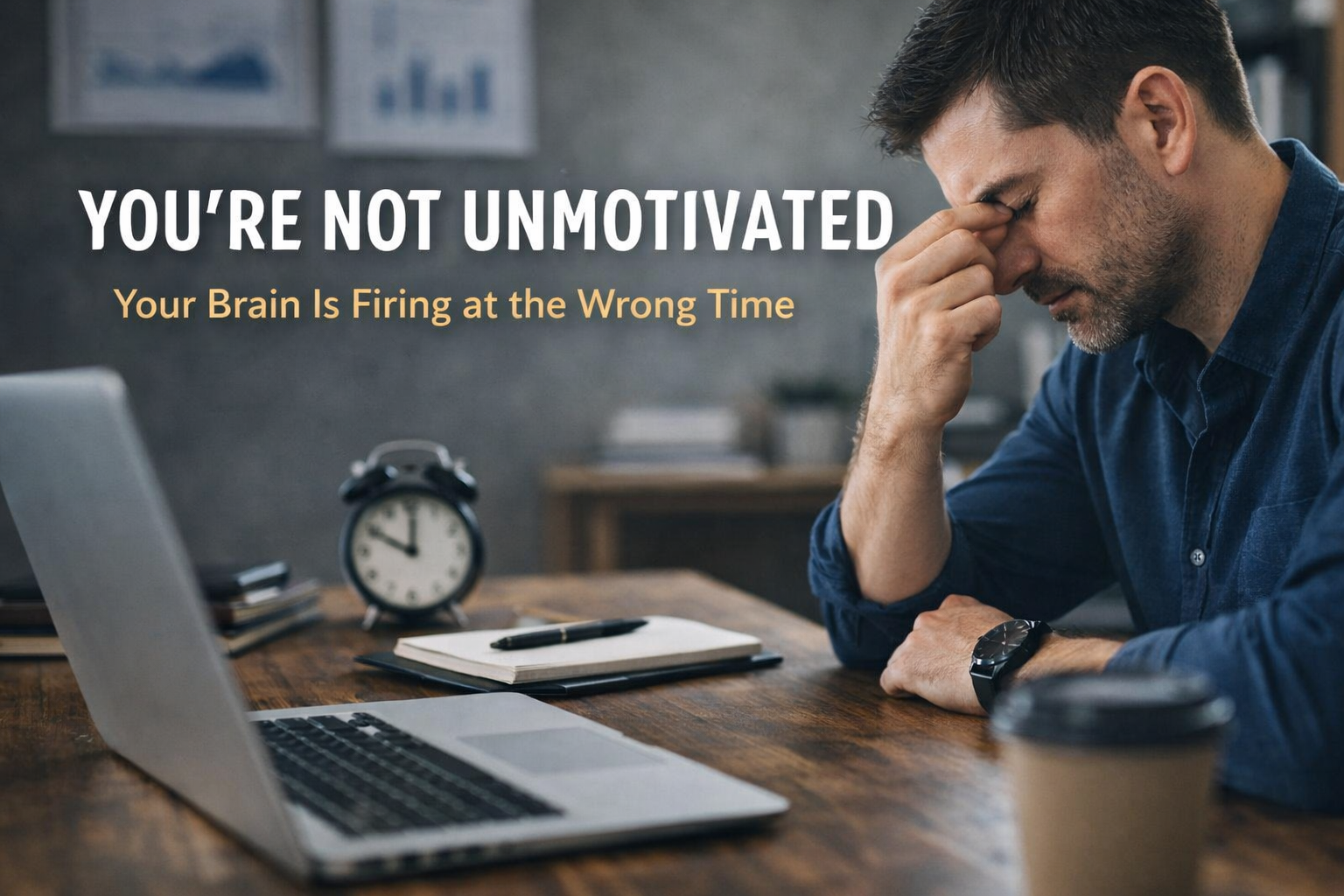

Man at desk with head in hand, laptop, alarm clock, and coffee cup. Text:
By Craig Allen February 21, 2026
Overthinking at the moment of action isn’t laziness. It’s a timing problem in the brain. Learn practical ways to close the execution gap.
Hands clasped together, resting in lap; person seated indoors, possibly in therapy setting.
By Craig Allen February 21, 2026
Clinical hypnosis, also called hypnotherapy, might seem mysterious at first. But real hypnosis is very different from entertainment. Read more.
Person in jeans sits in an armchair, hands clasped. Someone else holds a clipboard and pen.
By Craig Allen January 7, 2026
From hypnotherapy to MAT, this 2026 guide breaks down the best addiction treatments across Australia. Learn what works and why.
By Craig Allen January 3, 2026
By Craig Allen – Clinical Hypnotherapist & Strategic Psychotherapist, Canberra Summary This article explains how clinical hypnotherapy and strategic psychotherapy use neuroplasticity to interrupt anxiety and addiction patterns, based on lived experience and real clinical practice at Inspired Mindset in Canberra. Introduction: Why Insight Alone Often Isn’t Enough I don’t teach neuroplasticity because I read it in a textbook. I teach it because I lived it. Years ago, I was stuck in a repeating loop of addiction. I tried willpower. I tried logic. I tried traditional talk therapy. I understood why I was doing what I was doing — but nothing actually changed. What finally worked was learning how the brain forms highly efficient automatic patterns, and how those patterns can be updated rather than fought. Through Strategic Psychotherapy and Clinical Hypnosis, I learned how to dismantle the old “addiction highway” my brain had built and replace it with a different operating system altogether. Today, at Inspired Mindset Hypnotherapy Canberra, I use that same understanding to help clients realise something critical: You are not broken. You have a very efficient brain running an unhelpful strategy. Once the strategy changes, the struggle often reduces dramatically. What This Article Explains This article is for people who: Understand why they struggle with anxiety or addiction Have insight but still feel controlled by automatic reactions Feel “stuck” despite intelligence, motivation, or previous therapy It explains how neuroplasticity-based approaches, such as hypnotherapy and strategic psychotherapy, work at the level of subconscious patterns — not willpower alone — and why this matters in real clinical practice. What is Neuroplasticity-Based Hypnotherapy? Definition: Neuroplasticity-based hypnotherapy is a clinical approach that uses the brain's natural ability to form new neural pathways to interrupt automatic anxiety and addiction loops. Unlike talk therapy, which engages the logical mind, this method targets the subconscious "pattern" to update the nervous system's response. Neuroplasticity: The Inspired Mindset Roadmap Your brain is plastic. That means it can change at any age — not through force, but through targeted learning. Research consistently supports the brain's ability to reorganize itself by forming new neural connections throughout life, a principle that is fundamental to modern clinical hypnotherapy. At Inspired Mindset, our integrated approach follows a simple, clinically grounded three-step roadmap. 1. Pattern Identification – The Strategy Using Strategic Psychotherapy, we map how the problem runs. This includes: Cognitive distortions Emotional triggers Situational patterns The exact moment the “hijack” occurs This step answers the question: “What is the pattern, and how does it keep repeating?” Dive Deeper: If you are unsure which therapy fits your needs, read our detailed comparison: Hypnotherapy vs CBT vs Coaching: What Works Best for Anxiety? 2. Pattern Interruption – The Hypnosis Hypnosis works by reducing the interference of the part of the mind that says: “This won’t work” “I’ve always been like this” “I should be over this by now” In a focused hypnotic state, the brain becomes more receptive to updating learned emotional responses. This allows us to: Interrupt automatic anxiety or craving loops Reduce physiological over-reaction Create new emotional associations This is not loss of control. It is access to a learning state the brain already uses naturally. Further Reading: Curious about the science? We break it down in Does Hypnotherapy Really Work? Here’s What to Know . 3. Future-Proofing – The Coaching Once the old loop is weakened, we build forward momentum. Through Mindset Coaching, we: Reinforce new habits Strengthen identity shifts Prevent relapse into old patterns Build confidence through action This ensures the change isn’t just a temporary feeling — but a durable behavioural shift. Who Is Strategic Psychotherapy and Hypnotherapy For? This is not relaxation or surface-level mindset work. In my Canberra CBD clinical practice, this approach is particularly effective for: Panic and phobias – where the body reacts before thought Addictive behaviours – where cravings feel automatic and overpowering. (See also: Hypnotherapy for Addiction or our guide on Hypnosis for Gambling High-functioning anxiety – overthinking, control, and nervous-system overload Executive burnout – chronic amygdala activation under sustained pressure Related Guide: Learn more about our specific approach to Hypnotherapy for Anxiety & Depression . Does Hypnotherapy Work When Talk Therapy Hasn’t? Often, yes — particularly when insight is already present. Many clients understand their anxiety or addiction intellectually, yet still experience strong physical responses. In these cases, hypnotherapy can help by addressing the conditioned nervous-system reaction, not just conscious thought. This is why people often seek hypnotherapy after traditional approaches plateau. Who This Approach May Not Be Suitable For This work is not a replacement for: Acute psychiatric care Emergency mental health intervention Medical treatment Individuals experiencing active psychosis, unmanaged bipolar disorder, or immediate safety risks should seek appropriate medical or crisis services. Real Experience, Not Just Theory “I don’t just teach these methods; I used these exact tools to overcome my own addiction. This isn’t theory — it’s a roadmap I’ve lived.” — Craig Allen, Clinical Hypnotherapist “I tried traditional psychology for years. It helped me understand my anxiety, but the physical response didn’t change. After several hypnotherapy sessions with Craig, the anxiety response finally settled.” — Canberra Client Conclusion: You Don’t Have to Fight Your Brain Willpower is an exhaustible resource. Your subconscious is not the enemy — it’s an engine. When that engine is running the wrong program, life feels like a constant battle. When the program changes, effort drops away. If you’re ready to move past understanding why and start changing how, this work may be a good fit. Frequently Asked Questions (FAQ) Can hypnotherapy really change my brain? Yes. Through neuroplasticity, hypnotherapy helps "prune" old neural pathways (anxiety loops) and strengthen new ones (calm responses), effectively updating the brain's automatic software. Is this different from standard meditation? Yes. While meditation focuses on observation and mindfulness, Strategic Psychotherapy and Hypnotherapy are active interventions designed to dismantle specific triggers and install new behavioral patterns. How many sessions are typically needed? Unlike long-term talk therapy, this approach is brief and solution-focused. While every client is different, many people experience significant shifts within 3 to 6 sessions. Ready to Take the Next Step? If you’re in Canberra or looking for online hypnotherapy, you can book a free, no-pressure discovery call to discuss whether this approach is right for you. 👉 Book a Free 15-Minute Discovery Call with Craig Allen 👉 Explore Anxiety & Addiction Treatment Packages About the Author Craig Allen is a Certified Clinical Hypnotherapist and Strategic Psychotherapist based in Canberra. His work integrates clinical training with lived experience to help clients break free from anxiety, addiction, and entrenched behavioural patterns. At Inspired Mindset, Craig combines clinical hypnotherapy, strategic psychotherapy, and evidence-based coaching to support lasting change — not just symptom management.
By Craig Allen January 2, 2026
Struggling with anxiety in Canberra? Compare CBT, Life Coaching, and Clinical Hypnotherapy to find the root cause. Discover why an integrated approach works best.
Group of people in a circle, conversing in a light-filled room. They are diverse in age and race.
By Craig Allen September 13, 2025
Workplaces thrive when mental health is prioritised. Learn how corporate wellness programs can support both compliance and performance.
woman eating on a couch
By Craig Allen July 3, 2025
Emotional eating isn't about willpower. This blog reveals mindset strategies to break cravings and build long-term food freedom. Read more.
two injector dosing pens with yellow measuring tape around it
By Craig Allen July 3, 2025
From blood sugar to body weight—Ozempic is trending, but not without concerns. Find out why hypnotherapy may be a safer route. Read on.
A woman is laying on a couch while a man writes in a notebook.
By Craig Allen June 10, 2025
Inspired Mindset Hypnotherapy explores whether hypnosis works, how it’s used, and what the science says. Real results for smoking, anxiety, and more. Read on.
A woman is sitting on the floor surrounded by shadows of hands.
By Craig Allen June 10, 2025
Hypnosis targets the subconscious patterns behind phobias. This blog unpacks methods, success rates, and expert insights. Curious if it works? Start here.
  • ARE YOU READY TO TAKE THE FIRST STEP TO BUILDING A GROWTH MINDSET?

    Let Inspired Mindset provide you with the tools and methods you need to overcome difficult challenges and achieve your goals. Book a complimentary chat to discover your road to a living a happier and more fulfilling life.


    Let's Talk

I hope you enjoy reading this blog post.

Inspired Mindset helps ease physical, mental, emotional, behavioural (i.e. smoking, addiction and weight loss), and psychological symptoms (i.e. stress, anxiety and depression), so individuals can live happy and productive lives.