
You’re Not Unmotivated — Your Brain Is Firing at the Wrong Time
If you “know what to do” but don’t do it, motivation usually isn’t the problem. The issue is a timing error: your thinking ramps up exactly at the decision point, creating cognitive friction and threat appraisal. The fix isn’t more insight or willpower. It’s reducing decision-load, regulating the nervous system, and installing simple initiation rules. At Inspired Mindset in Canberra (supporting clients Australia-wide online), I help capable adults close this execution gap, so action becomes simpler and more reliable.
Key takeaways
- Capable people stall because the brain treats action as risk and responds with “analysis” instead of “initiate.”
- Thinking harder often increases friction: more options, more uncertainty, more delay.
- If your body is in a stress response, cognitive scripts can fail; you need to address physiology as well as thinking. [2][3]
- Self-trust returns when you measure starts, not moods or outcomes.
- The goal isn’t “never overthink.” It’s “overthinking no longer decides.”
One-sentence takeaway: You’re not broken—you’re stuck in a timing problem where thinking spikes at the exact moment action needs to begin.
If you’re reading this, you’re likely high-functioning but frustrated. You handle big responsibilities for others, yet you stall on your own goals. This mismatch — high capability + low follow-through — erodes self-trust. You start treating your own promises like marketing fluff.
At Inspired Mindset in Canberra, I see this pattern often in professionals and business owners across Australia who are tired of calling themselves “unmotivated.”
The problem isn’t your character; it’s your mechanics.
Why You’re Not Unmotivated: The Decision-Point Spike
For capable adults, procrastination is often a protective response that kicks in at the worst possible time. You don’t stall all day; you stall in the gap right before the email, the gym session, or the hard conversation.
1) Threat appraisal + physiology
Action creates exposure: judgment, failure, conflict, uncertainty. Your nervous system reads that as “risk” and can trigger a stress response—sometimes including freezing (shutdown, blank mind, can’t start). [2][3]
When your breath is shallow or your body is braced, your brain often won’t let you initiate—even if the task is simple.
2) Cognitive overload
More thinking feels like control, but it burns the mental fuel needed to move. Under load, “starting” becomes an Olympic lift even if the task is a feather.
3) The insight trap
Understanding why you’re stuck can feel like progress, but insight doesn’t create a trigger. You can be the world’s leading expert on your own patterns and still be paralysed.
Definition Block 1: Rumination vs Worry
Definition:
- Rumination loops on what went wrong or what things “mean.”
- Worry loops on what might go wrong next. [1]
Why it happens: The mind tries to reduce uncertainty and prevent pain by rehearsing outcomes, but it often feeds anxiety and stall instead.
What helps: Redirect from “figuring it out” to “initiating the smallest physical step,” then reassess after movement, not before.
Definition Block 2: The Freeze Response at the Decision Point
Definition: Freeze is a stress response where your body shifts into shutdown/immobility—often experienced as blankness, heaviness, avoidance, or “I can’t start.” [2][3]
Why it happens: Your nervous system prioritises safety over progress. If action feels like threat (evaluation, uncertainty, conflict), your system may default to delay as protection.
What helps: Regulate the body first (breath + movement), then initiate a tiny step that proves “starting is safe.”
Help for Overthinking and Procrastination in Canberra
This is written for capable adults—people who have tried “discipline,” “motivation hacks,” and long to-do lists. These strategies work because they target the real bottleneck: initiation at the decision point.
1) Identify the trigger, then reset the body
Name the moment you stall:
- “When I open the laptop…”
- “When I’m about to hit send…”
- “When I’m about to have the hard conversation…”
Before you try to “think” your way out, change your physical state (because threat responses are physical). [2][3]
Try one of these for 30–60 seconds:
- 5 slow exhales (longer out-breath than in-breath)
- stand up + shake out hands/arms
- brief walk to the door and back
- unclench jaw/shoulders and drop the tongue off the roof of the mouth
Your goal: reduce bracing, signal safety, then start.
2) Cut the “choice surface area”
Overthinking grows with options. Reduce options on purpose:
- Choose the default next step 24 hours in advance.
- Use templates and SOPs so you aren’t designing while doing.
- Set “good enough” criteria before you start.
If you decide everything from scratch, you force your brain to do the hardest version of execution every time.
3) Replace motivation with initiation scripts (If–Then)
Remove the “should I?” debate with pre-set triggers:
- If it’s 7:30am and I’ve finished coffee, then I put my shoes on.
- If I feel the urge to research more, then I write one paragraph first.
This moves you from mood-based decisions to clear, repeatable scripts.
4) Use the 2-minute start line
The goal is not completion; it’s nervous system permission to begin. Examples:
- Write one sentence.
- Open the document and title it.
- Put one item on the bench.
- Draft the first 3 bullet points.
Once you’re in motion, the “spike” usually drops and the next step becomes easier.
5) Practise imperfect action tolerance
Overthinking is often perfectionism in disguise. Your brain learns safety through reps, not reassurance. Deliberately:
- Submit Version 1.
- Publish the helpful draft.
- Have the imperfect conversation.
You’re teaching your system: “I can act without everything feeling perfect first.”
6) Contain the noise (don’t fight it all day)
If your brain spins, don’t suppress it—schedule it. [3]
- Pick a 15-minute “Worry Window” daily.
- During that window, list worries and one small action for each.
- Outside that time, defer: “Not now—I’ll deal with that at 6:00pm.”
These stops worry hijacking every decision point.
Quick self-check
If these are true, you’re probably dealing with a timing/threshold problem (not laziness):
- I stall right before starting, not during the work.
- I plan/research to feel relief, then delay.
- The “start line” feels too big (I need perfect conditions).
- I get a body reaction (tight chest, shallow breath, heaviness, numbness) when action matters. [2][3]
- I judge myself as unmotivated even though I care and think about it constantly.
What to do next (step-by-step)
- Name your trigger: “When I’m about to ____, I spike and stall.”
- Choose a 2-minute start line that counts.
- Write one if–then initiation script for the next 7 days.
- Reduce choices: decide the first step before the moment arrives.
- Track reps, not outcomes: “Did I start?” is the KPI.
Fast fixes table
| Problem at decision point | What it looks like | Fast fix |
|---|---|---|
| Too many options | endless comparing/researching | pick a default next step; time- box it |
| High threat appraisal | “What if I fail?” loops | Smallest reversible action + slow exhale |
| Start line too big | “I need two hours free” | 2-minute start line + stop rule |
| Perfection pressure | “It’s not ready yet” | intentionally imperfect Version 1 |
| Mental noise | constant rumination/worry | worry window + defer outside it |
Common myths
“I need more discipline.” If your nervous system is spiking, discipline becomes a blunt tool and often ends in burnout. You need better mechanics, not more self-punishment. [2][3]
“Confidence comes first.” Confidence is a lagging indicator. It follows action; it rarely precedes it.
“Overthinking means I care.”
Sometimes. Often it’s avoidance of uncertainty disguised as preparation. Caring is expressed through movement, not endless rehearsal.
How Inspired Mindset Helps
At Inspired Mindset, I work with capable people whose thinking interferes with their execution. We don’t just talk about the problem; we install the mechanics that bypass the spike.
- Learn the approach: About Craig Allen
- Strategic support: Anxiety and depression support
- The practice: Inspired Mindset
The process typically looks like this:
- Clarify the decision-point pattern (where action collapses).
- Install initiation triggers and smaller start lines.
- Use strategic psychotherapy (including hypnotherapy) to reduce the threat response and improve follow-through.
- Reinforce consistent execution so self-trust returns over time.
FAQ
1) Is this procrastination or anxiety?
Often it’s both. Anxiety can show up as worry, avoidance, and physical stress responses that make starting harder. [2][3]
2) Why can I execute at work but stall in my personal life?
Work often has structure, deadlines, and external accountability. Personal goals rely on self-initiation—where the decision-point spike hits hardest.
3) Do I need more motivation?
Usually not. Most capable adults have motivation. The issue is initiation mechanics under load—too many decisions at the moment you need to move.
4) What’s the fastest way to break the loop today?
Do a 30–60 second body reset (slow exhale + movement), then complete a 2-minute start line. Stop if you want. Your KPI is “started.”
5) Can hypnotherapy help with overthinking and follow-through?
For some people, hypnotherapy may support nervous system regulation and behaviour change when combined with practical strategies. Outcomes vary, and it’s not a guaranteed fix.
Ready to Close the Gap?
If you’re tired of knowing what to do but not doing it, and you want a structured execution framework—not just more insight—let’s talk. Book a consult here:
Contact
External resources
- Healthdirect – Anxiety (https://www.healthdirect.gov.au/anxiety) [2]
- Beyond Blue – Anxiety signs & symptoms (https://www.beyondblue.org.au/mental-health/anxiety/signs-and-symptoms) [3]
- CCI (WA Health) – Worry and rumination (https://www.cci.health.wa.gov.au/resources/looking-after-yourself/worry-and-rumination) [1]
References
[1] CCI (WA Health) – Worry and rumination (https://www.cci.health.wa.gov.au/resources/looking-after-yourself/worry-and-rumination)
[2] Healthdirect – Anxiety (https://www.healthdirect.gov.au/anxiety)
[3] Beyond Blue – Anxiety signs & symptoms (https://www.beyondblue.org.au/mental-health/anxiety/signs-and-symptoms)
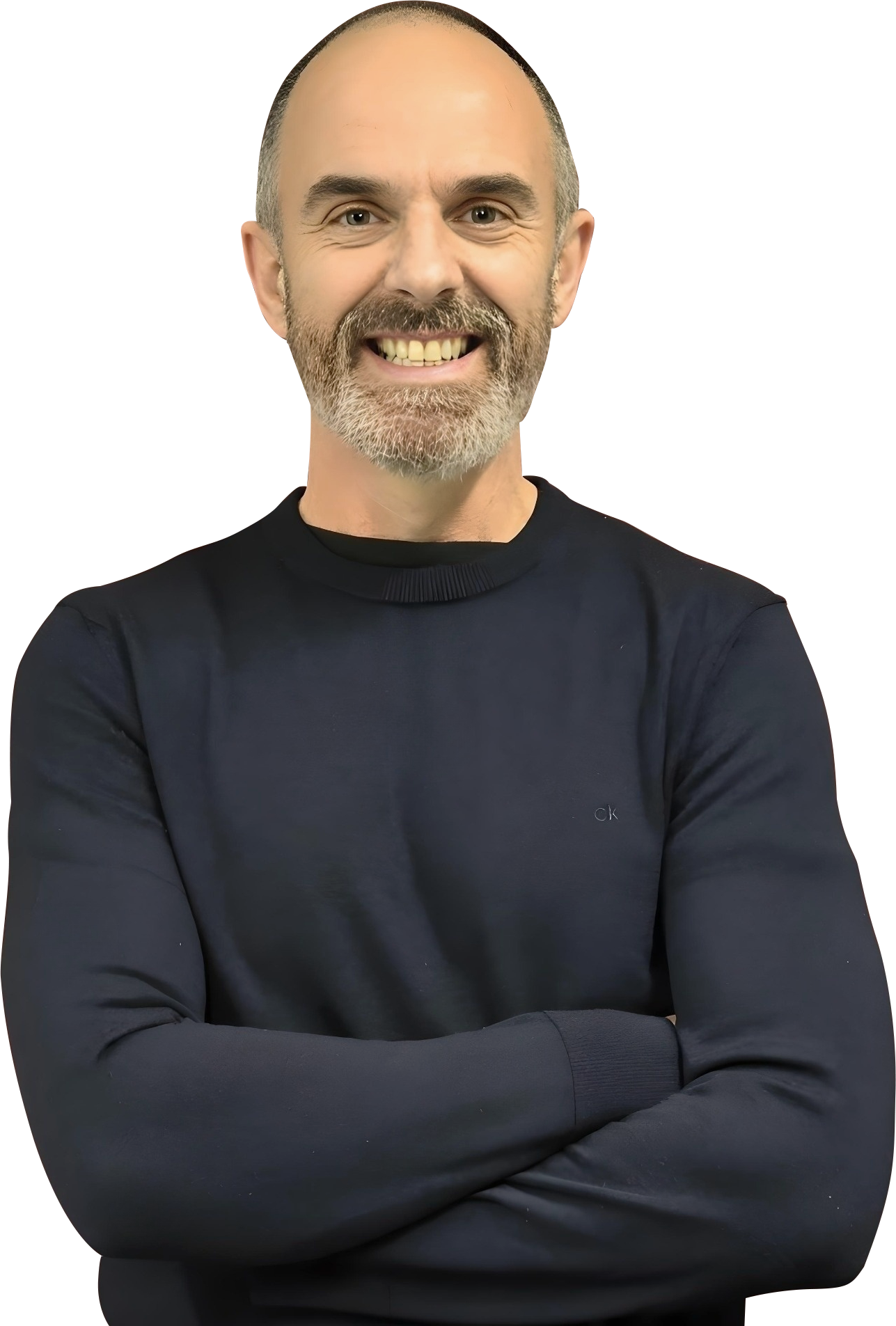
The "Authority" Bio: Craig Allen
Craig Allen is a Strategic Psychotherapist and Clinical Hypnotherapist based in Canberra, specialising in the neurobiology of execution. He focuses on the "Execution Gap"—the specific space where high-functioning professionals and business owners stall despite having the skills and motivation to succeed.
Rather than traditional, open-ended talk therapy, Craig utilises a pattern-interruption approach rooted in Strategic Psychotherapy and Neuroplasticity. His methodology targets the nervous system's "freeze" response at the decision point, helping clients bypass the cognitive friction of overthinking.
As the founder of Inspired Mindset, Craig combines rigorous clinical training (Diploma of Clinical Hypnosis and Strategic Psychotherapy) with a battle-tested understanding of brain-rewiring. He provides a direct, no-fluff framework for clients in Canberra and Australia-wide to reclaim their self-trust through consistent action.
Disclaimer: This article is general education only and isn’t a substitute for medical advice, diagnosis, or treatment. If you’re concerned about your mental health, seek advice from a qualified professional.